Invasive Species Removal in Southern Maine
Mechanical Control of Japanese Knotweed, Poison Ivy, Barberry & More
Taylor Forestry Mulching uses specialized forestry mulching equipment, including a remote-controlled mulcher, to cut and reduce invasive species mechanically. No herbicide applied by us, and remote operation reduces the need for hand contact with hazardous plants. Veteran owned, with erosion and sediment controls planned for work in sensitive shoreland areas.
Invasive species removal in Southern Maine costs between $1,000 and $4,000 depending on species, area, and accessibility. Japanese knotweed is the most common invasive plant in Maine, affecting over 40% of residential properties near waterways. Taylor Forestry Mulching treats invasive species mechanically using forestry mulching equipment and does not apply herbicide. Work inside Maine's 250-foot shoreland zone is planned around state erosion and sedimentation control practices and the local ordinance. Based in Saco, Maine, they serve over 30 towns within a 50-mile radius including Portland, Scarborough, Biddeford, Kennebunk, and Gorham.
Why Invasive Species Are a Serious Problem in Maine
Maine's Do Not Sell Plant List, in effect since January 1, 2018 and expanded on January 1, 2024, makes it illegal to import, export, buy, sell or intentionally propagate for sale the invasive plants it lists. These are not just weeds that look bad. They cause real, measurable damage to your property and your family's safety.
Japanese knotweed can exploit existing cracks in foundations and pavement and is a growing concern in home sales. Japanese barberry creates prime habitat for Lyme disease-carrying ticks. Research from Maine Medical Center's Lyme and Vector-Borne Disease Laboratory found that barberry thickets can harbor up to 12 times more Lyme disease-carrying ticks per acre than areas without barberry. Poison ivy and giant hogweed can cause severe skin reactions, and giant hogweed sap can cause burns and serious eye injury.
DIY removal usually fails and often makes the problem worse. Cutting knotweed without proper technique spreads it. Pulling barberry without PPE means tick exposure. Burning poison ivy releases urushiol particles in smoke, which can cause severe respiratory distress and hospitalization if inhaled. Invasive species are the second-greatest threat to global biodiversity after habitat loss.
The longer you wait, the more expensive and difficult removal becomes. Invasive species spread aggressively. A small patch today becomes an acre next year. Property owners across Saco, Portland, Scarborough, and Biddeford are dealing with infestations that could have been controlled years ago for a fraction of today's cost.
Why Forestry Mulching Is the Best Way to Remove Invasive Species
Forestry mulching grinds invasive plants down to the root crown in a single pass. This is far more aggressive and thorough than hand-pulling, mowing, or chemical spraying. For most species the mulched material stays on the ground as a natural suppression layer, blocking sunlight and reducing regrowth without leaving bare soil exposed to erosion. Japanese knotweed is an exception: its fragments should not be assumed nonviable, so a knotweed plan must address containment, material handling, equipment inspection and cleaning, and follow-up.
Because we do not apply herbicide, there is no herbicide residue or drift from our work. Mulching also delivers immediate, visible reduction in above-ground growth, where spraying takes time to show effects. Neither approach removes deep rhizome systems in one pass, so monitoring and follow-up are normal. What takes a crew with hand tools weeks, our equipment does in hours.
Our remote-controlled mulcher is the key advantage for hazardous species. The operator works at a distance with a clear line of sight while the mulching head cuts poison ivy, thorny barberry thickets, and dense brush at ground level, reducing the need for hand contact. It reduces risk rather than eliminating it: customers, children, and pets stay outside the active work area, and disturbed material, tools, and equipment are treated as potentially contaminated.
Invasive Species We Remove
Click any species below to learn how to identify it and why professional removal matters.

Japanese Knotweed
Fallopia japonica
How to identify it: Look for bamboo-like hollow stems up to 10 feet tall with distinctive heart-shaped leaves approximately 6 inches long with pointed tips. In late summer, small white flower clusters appear. Dead brown-red stalks persist through winter, making it identifiable year-round. The stems have a characteristic zig-zag branching pattern at each node.
Why it is dangerous: Japanese knotweed is one of the most aggressive invasive plants in the world. It spreads through living rhizome and stem fragments, so cut material, moved soil, and contaminated equipment can start new stands. Its growth can exploit existing cracks and weaknesses in foundations, pavement, and drainage lines, and buyers or home inspectors in the Northeast increasingly note it. Impacts vary by property, and no structural, appraisal, or sale outcome is guaranteed. Common throughout Portland, Scarborough, Biddeford, and along riverbanks across Southern Maine.
How we treat it: Our equipment cuts the dense above-ground growth far faster than hand-cutting, reducing biomass and improving access in a single day on stands that would take manual crews weeks. One visit does not remove the underground rhizome system, and regrowth should be expected. Established stands need containment, careful material and equipment handling, monitoring, and follow-up over multiple growing seasons.

Japanese Barberry
Berberis thunbergii
How to identify it: Dense, thorny shrub with small oval leaves that turn red in fall. Small yellow flowers appear in spring. Bright red berries persist into winter. Arching branches with sharp thorns form impenetrable thickets 3 to 5 feet tall. Often found in woodland edges, abandoned fields, and residential property boundaries throughout Gorham, Windham, Standish, and Buxton.
Why it is dangerous: This is the Lyme disease connection. Research from the Maine Medical Center's Lyme and Vector-Borne Disease Laboratory found that barberry thickets create humid microclimates that are ideal habitat for blacklegged deer ticks. Barberry patches can harbor up to 12 times more Lyme disease-carrying ticks per acre compared to areas without barberry. Japanese barberry has been banned from sale in Maine since January 1, 2018. White-footed mice, the primary Lyme disease reservoir, nest inside the thorny thickets where they are protected from predators.
How we remove it: The remote-controlled mulcher is critical here. Manually clearing thorny barberry means workers wading through prime tick habitat with thorns tearing clothing and creating skin exposure. Our RC mulcher grinds barberry thickets from a safe distance. No human contact with the plants or the ticks they harbor. A Connecticut Agricultural Experiment Station study found that clearing barberry from forest areas substantially reduced tick abundance over several years.

Poison Ivy
Toxicodendron radicans
How to identify it: "Leaves of three, let it be." Grows as ground cover, shrub, or climbing vine with aerial rootlets. Leaves are glossy green in summer, turning red and orange in fall. Contains urushiol oil on all plant surfaces year-round, including stems, roots, and dead material. Common throughout Southern Maine in sunny edges of trails, property boundaries, fence lines, and disturbed areas.
Why it is dangerous: Contact with any part of the plant causes painful, blistering rash in approximately 85% of people. Urushiol remains active on surfaces like tools, clothing, and pet fur for months. Burning poison ivy releases urushiol particles in smoke, which can cause severe respiratory distress, swelling of airways, and hospitalization. This is not a minor inconvenience. It is a genuine health hazard, and official guidance warns against burning or handling the plant.
How we treat it: Our remote-controlled mulcher cuts poison ivy at ground level while the operator works at a distance, so nobody needs to hand-pull or hand-cut it. This is the number one use case for our RC equipment. It reduces direct-contact opportunity, but it does not make the work exposure-free or the disturbed material immediately urushiol-free. Never burn poison ivy debris, keep people and pets outside the work area, and expect possible resprouting from roots left in the soil.
Asiatic Bittersweet
Celastrus orbiculatus
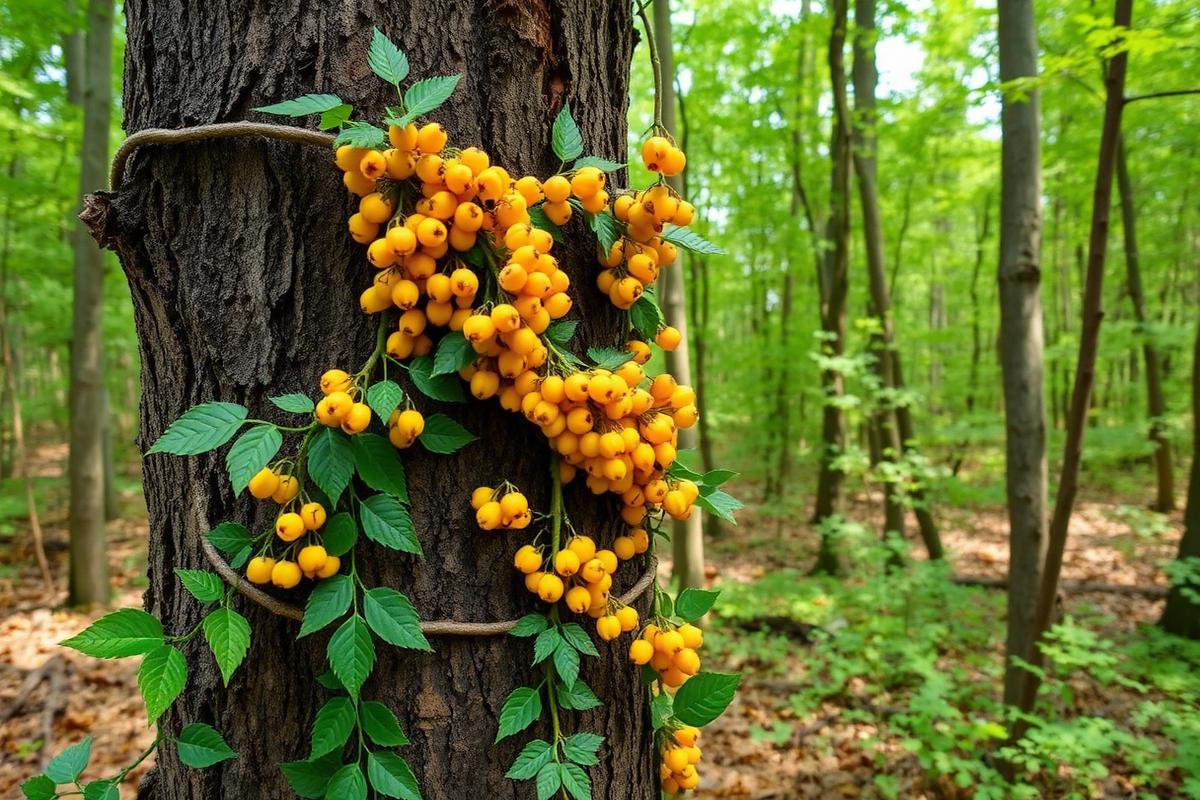
How to identify it: Aggressive woody vine that wraps around and climbs mature trees. Green to orange fruits ripen to bright red berries in yellow capsules in autumn. Can climb to the top of the forest canopy. Thick woody stems spiral around tree trunks. Visible along I-95 corridors and throughout Southern Maine's coastal forests.
Why it is dangerous: Girdles and kills mature trees by constricting trunks and branches. Can topple trees under the weight of vine growth, creating hazards for homes and power lines. One of the most widespread and destructive invasive plants in Maine. Property managers, HOAs, and lakefront owners in Falmouth, Cape Elizabeth, Kennebunk, and Wells deal with bittersweet constantly.
How we remove it: Our equipment cuts vine at the base and grinds the root crown. Much faster than hand-pulling thick woody vines that have wrapped around trees for years. For large infestations, we can clear entire tree lines in a single day.
Multiflora Rose
Rosa multiflora
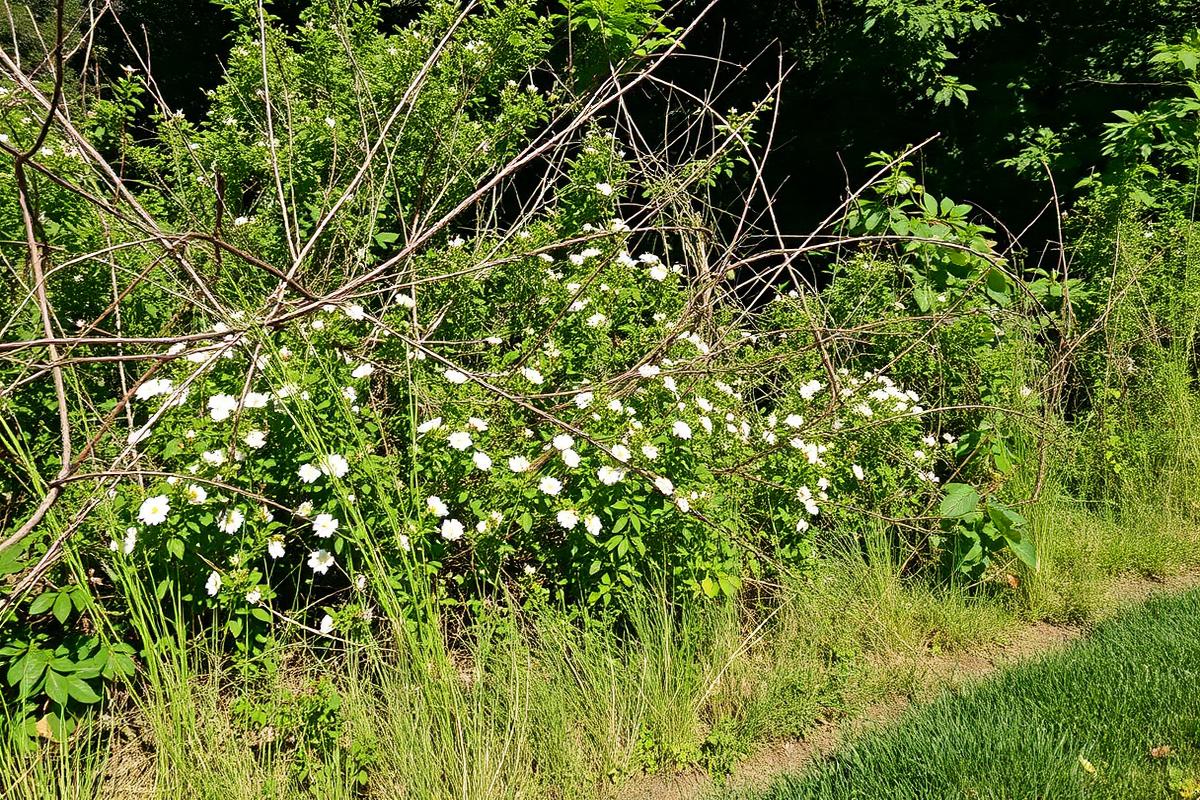
How to identify it: Dense, thorny shrub with arching branches. Clusters of small white flowers bloom in June. Groups of 5 to 11 leaflets with toothed edges. Stout curved thorns line the stems. Forms impenetrable thickets in fields, forest edges, and along property boundaries throughout Buxton, Hollis, Waterboro, and Limington.
Why it is dangerous: Creates impenetrable thorny barriers that block access to your property. Stout curved thorns cause injuries to anyone attempting manual removal. Displaces native vegetation and provides poor wildlife habitat compared to native shrubs.
How we remove it: Like barberry, the remote-controlled mulcher clears thorny thickets from a safe distance. No workers getting torn up by thorns. No tick exposure. The mulching head processes the entire shrub, thorns and all, into ground-level mulch in seconds.
Glossy Buckthorn
Frangula alnus
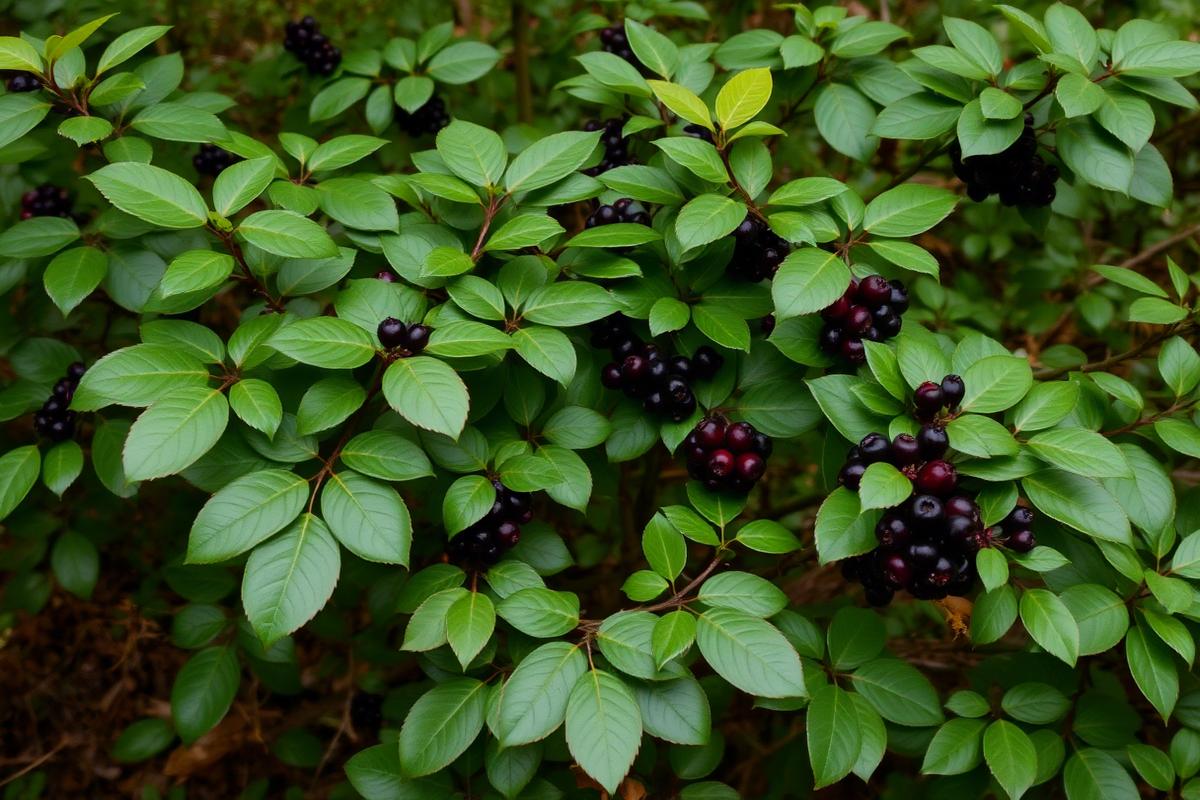
How to identify it: Shrub or small tree with glossy, dark green leaves with prominent parallel veins. Small greenish flowers in spring. Dark purple to black berries spread by birds in late summer. Can grow to 20 feet if left unchecked. Commonly found along pond edges, stream banks, and wetland margins.
Why it is dangerous: Aggressive colonizer of wetlands, shoreland areas, and forest edges. One of the most problematic species in Maine's regulated shoreland zones. Its berries are spread widely by birds, making it nearly impossible to contain without professional intervention. Displaces native shrubs that provide better wildlife habitat.
How we remove it: Buckthorn often concentrates inside the 250-foot shoreland zone, where clearing is regulated. We plan that work around the applicable vegetation standards and erosion controls and confirm requirements with your local Code Enforcement Officer before starting.
Giant Hogweed & Wild Parsnip
Heracleum mantegazzianum / Pastinaca sativa
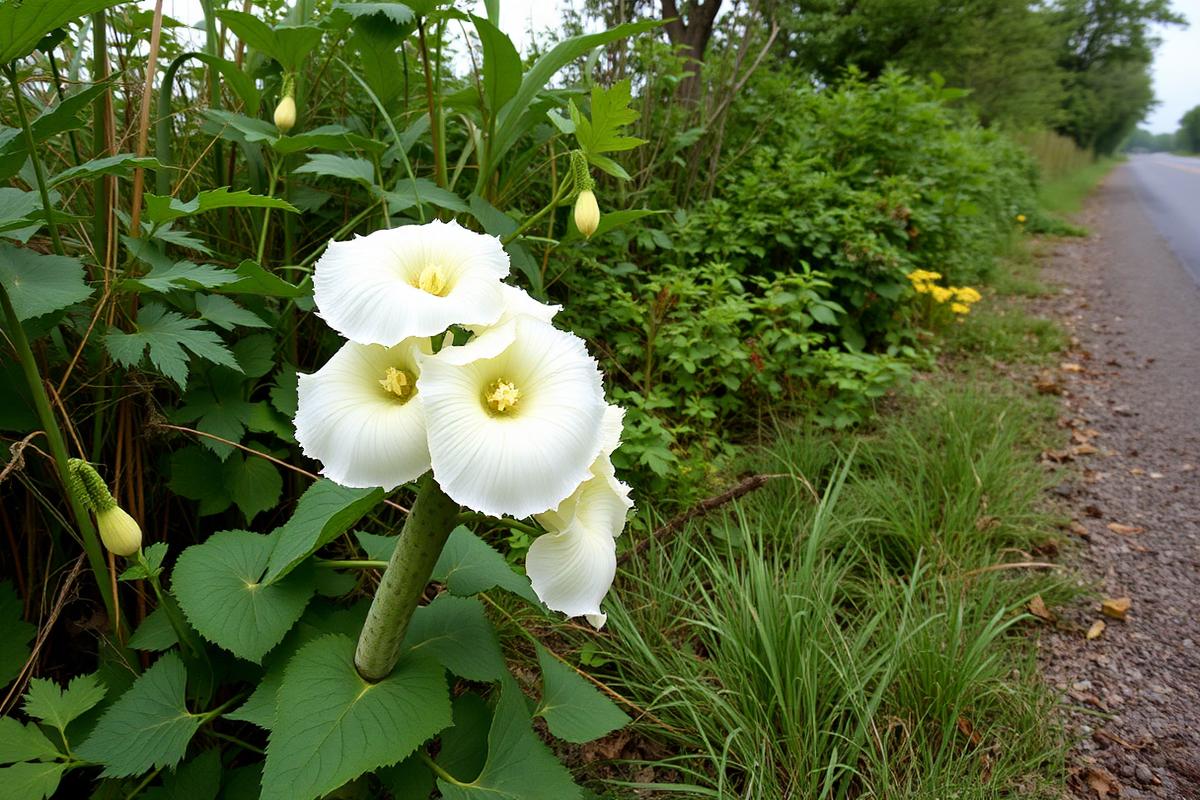
How to identify it: Giant hogweed grows up to 14 feet tall with massive white umbrella-shaped flower clusters up to 2.5 feet across. Thick green stems have purple blotches and coarse white hairs. Deeply lobed leaves can reach 5 feet wide. Wild parsnip is smaller (4 to 5 feet) with flat-topped yellow flower clusters. Both are found in disturbed areas, roadsides, and field edges.
Why it is dangerous: Giant hogweed sap causes phytophotodermatitis, meaning severe chemical burns, blistering, and potential permanent blindness upon exposure to sunlight. Wild parsnip causes similar but less severe burns. These are among the most dangerous plants in New England. Do NOT attempt to remove giant hogweed yourself. Contact with the sap causes severe chemical burns and potential blindness. Call a professional.
How we treat it: The remote-controlled mulcher lets the operator work at a distance, so nobody needs to hand-cut or handle giant hogweed or wild parsnip. That reduces direct-contact opportunity but does not make the work exposure-free: PPE, exclusion zones, decontamination, and site-specific controls still apply, disturbed material is treated as potentially contaminated, and the seed bank means monitoring and repeat treatment may be needed.
Shoreland-Aware Invasive Species Work
Invasive species often concentrate near water, along lakefronts, riverbanks, and wetland edges. Shoreland areas are regulated, and municipalities administer shoreland zoning and may impose stricter requirements than the state minimums. We plan work in these sensitive areas around erosion and sedimentation control practices and the applicable shoreland standards, and we confirm requirements with your municipality before qualifying work begins. If you have knotweed along your riverbank, buckthorn invading your lakefront, or bittersweet choking trees near a wetland, we will assess the site and identify the questions and constraints to confirm with your Code Enforcement Officer and applicable agencies.
Purpose-Built for Invasive Species Work
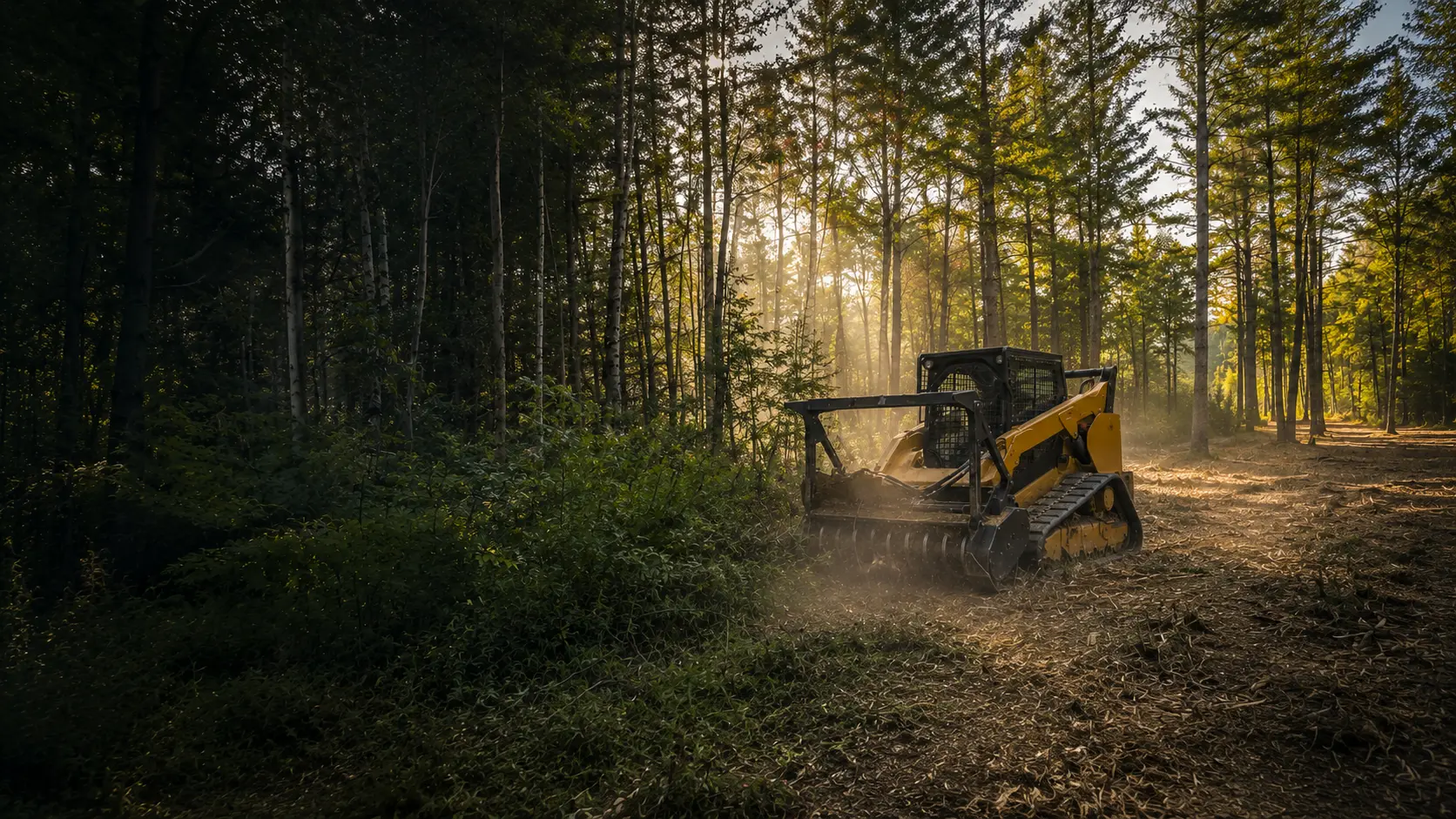
Our primary workhorse is the Takeuchi TL10V2 compact track loader with a forestry mulching head. This machine delivers the power to grind dense knotweed stands, thick bittersweet vines, and mature buckthorn in a single pass while maintaining a compact footprint that minimizes ground disturbance.
For hazardous species like poison ivy, giant hogweed, and thorny barberry, we deploy our remote-controlled mulcher. The operator stays at a safe distance while the machine does the dangerous work. This is also the tool of choice for extreme slopes, sensitive turf areas, and tight spaces around septic systems and foundations. For large-diameter trees that need to come down before mulching can begin, we partner with Rayco Bob, a professional tree feller.
Invasive Species Removal FAQ
Stop Invasive Species from Taking Over Your Property
Every week you wait, invasive plants spread further. Call (207) 819-8660 for a free on-site assessment, or submit a quote request below.
Get Your Free Quote Today
Tell us about your property and we'll provide a free, no-obligation quote within 24 hours. Most residential projects are completed in a single day.
Ready to Clear Your Southern Maine Property?
Stop letting brush and overgrowth steal your land. Get a free, no-obligation quote and see what your property could look like tomorrow.