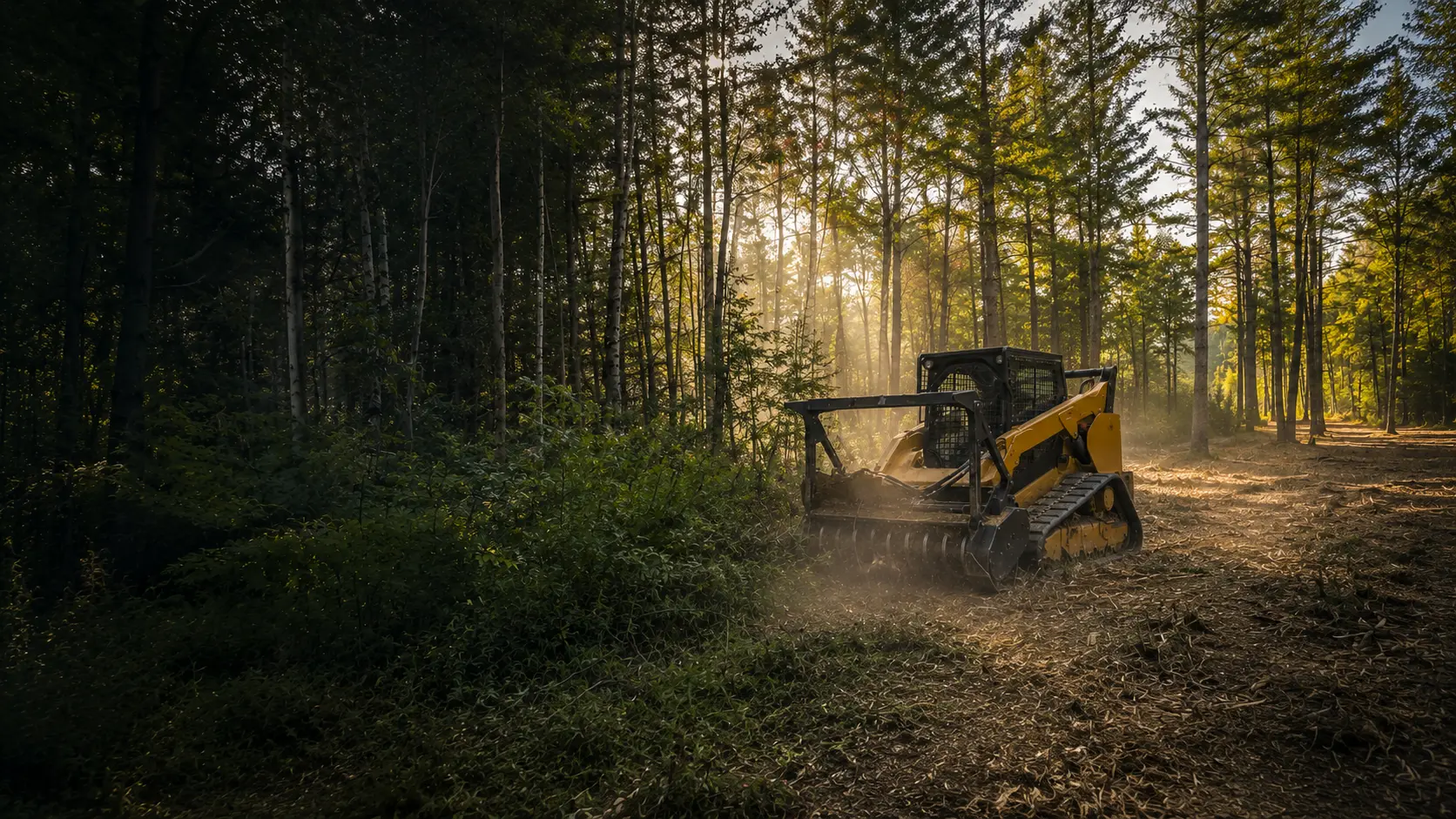
Poison ivy is everywhere in Southern Maine. It grows along property boundaries, fence lines, trails, foundations, and anywhere sunlight reaches disturbed ground. Most people are allergic to urushiol, the oil that causes the painful, blistering rash. If you have poison ivy on your property, mechanical mulching can quickly reduce the visible growth and make an area usable again. It is not a one-pass eradication guarantee, and urushiol precautions still matter afterward.
Why Poison Ivy Is More Dangerous Than Most People Think
Most people know to avoid poison ivy's distinctive three-leaf clusters. But the real dangers go beyond a simple rash:
Hidden Dangers of Poison Ivy
- Year-round toxicity: Urushiol oil is present on all parts of the plant in every season, including bare winter stems and dead leaves.
- Surface persistence: Urushiol remains active on tools, gloves, clothing, and pet fur for months or even years.
- Airborne danger: Burning poison ivy releases urushiol particles in smoke. Inhaling this smoke can cause severe respiratory distress, swelling of airways, and hospitalization.
- Invisible contact: You can get a reaction from touching a tool that contacted poison ivy weeks ago, or from petting a dog that walked through it.
- Increasing potency: Research suggests that rising CO2 levels are making poison ivy grow faster, larger, and produce more potent urushiol.
Why DIY Removal Is Risky
Every common DIY method for poison ivy removal puts you at risk of exposure:
Hand pulling brings you into direct contact with the plant. Appropriate protective clothing and gloves can reduce risk, but contaminated plants, gloves, clothing, and tools can transfer urushiol to skin afterward, and a gap or tear increases that chance. Root fragments left behind can also resprout.
Weed whacking or mowing can scatter contaminated plant material onto skin, eyes, and clothing, which increases exposure opportunity compared with leaving the plant undisturbed.
Burning is the most dangerous option. Urushiol particles in smoke can cause severe internal reactions if inhaled, including swelling of lung tissue that requires emergency medical treatment. Never burn poison ivy.
Herbicide may be part of a management plan, but it does not make dead plant material immediately urushiol-free: treated stems and roots should still be treated as potentially contaminated. Taylor Forestry Mulching provides mechanical treatment and does not apply herbicide. Where herbicide is appropriate, it should be applied by a properly licensed professional following label directions and applicable Maine requirements.
Remote-Controlled Mulching: Reducing Contact, Not Eliminating Risk
Remote-controlled mulching lets the operator work at a distance, reducing the need for direct hand contact while cutting dense poison ivy and surrounding brush. Here is how it works:
The operator works at a distance from the patch, controlling the machine by remote. The mulching head cuts poison ivy stems, vines, leaves, and accessible root crowns at ground level, so nobody needs to hand-pull or hand-cut the plant. That reduces direct-contact opportunity, but it does not make the work exposure-free or the disturbed material immediately urushiol-free.
Urushiol can remain on cut or dead plants, clothing, tools, and equipment, and poison ivy may resprout from roots left in the soil. Mechanical mulching is vegetation reduction and control, not a one-pass eradication guarantee, so monitoring or follow-up may be needed. We do not apply herbicide, but "no herbicide applied by us" is not the same as "no risk."
Common Locations We Clear in Southern Maine
We regularly remove poison ivy from these common locations across Saco, Portland, Scarborough, South Portland, and Biddeford:
- Property boundary lines and fence rows
- Along foundations and around decks
- Trail edges and walking paths
- Children's play areas and backyards
- Around sheds, garages, and outbuildings
- Climbing up trees (vine form)
- Along driveways and walkways
No job is too small. If you have a patch of poison ivy that is keeping your family from enjoying your yard, call (207) 819-8660. We will come out, assess access, slope, drainage, nearby water and landscaping, and give you a quote along with a realistic view of the follow-up your site may need.
Safety Note: What Still Matters After Mulching
- Never burn poison ivy or debris that may contain it.
- Customers, children, pets, and bystanders must stay outside the active work area.
- Treat disturbed vines, mulch, tools, and equipment as potentially contaminated. Avoid handling them.
- There is no universal "safe after X hours, days, or one season" promise. We do not invent an exclusion period.
- Remote operation reduces direct-contact opportunity. It does not guarantee zero exposure.
- Our mechanical service does not apply herbicide. "No herbicide applied by us" is not the same as "no risk."
- Poison ivy may resprout from roots left in the soil. Whether follow-up is needed depends on the site.
For official guidance, see the CDC/NIOSH poisonous plants guidance and Maine's poison ivy guidance.
Poison Ivy Questions We Hear Most
Will poison ivy grow back after mulching?
Possibly. Mulching reduces visible growth and may damage accessible root crowns, but poison ivy can resprout from roots left in the soil. We recommend monitoring and may recommend follow-up based on the site.
Is the area safe immediately after mulching?
We do not promise that a treated area is immediately urushiol-free. Urushiol can remain active on dead plant material and contaminated objects. Avoid touching disturbed plant material or equipment and follow the site-specific precautions discussed for the property.
Does remote operation eliminate exposure?
No method can guarantee zero exposure. Remote operation increases the distance between the operator and the plants and reduces the need for hand contact. Work-area controls, protective clothing when handling material, and equipment cleaning are still important.
Does the process create airborne urushiol?
We do not make a zero-airborne-particle guarantee. CDC's documented inhalation warning includes smoke from burning poison ivy, and our process does not burn vegetation. Because mulching disturbs plant material, customers and bystanders must remain outside the active work area.
Is it safe near my well or garden?
Our mechanical service does not apply herbicide. Site suitability still depends on access, slope, drainage, nearby water and landscaping, and applicable requirements. We assess those conditions before work; we do not promise zero impact or risk.
Will mulched material still cause a rash?
Treat disturbed poison ivy material as potentially containing urushiol. Official guidance does not provide a universal period after which mulched material is guaranteed urushiol-free, so avoid handling it.
Poison Ivy Keeping You Out of Your Own Yard?
Call (207) 819-8660 for a site assessment. Remote-controlled mulching reduces the need for hand contact while cutting dense poison ivy and brush, with clear precautions and follow-up guidance. Serving all of Southern Maine.