Multiflora rose (Rosa multiflora) was once promoted by the USDA as a "living fence" for livestock and erosion control. That recommendation backfired spectacularly. Today, multiflora rose forms impenetrable thorny thickets across thousands of acres in Southern Maine, blocking trails, consuming pastures, and making property boundaries completely inaccessible. If you have ever tried to walk through a multiflora rose thicket, you know exactly how painful and impossible it is.
How to Identify Multiflora Rose
Identification Features
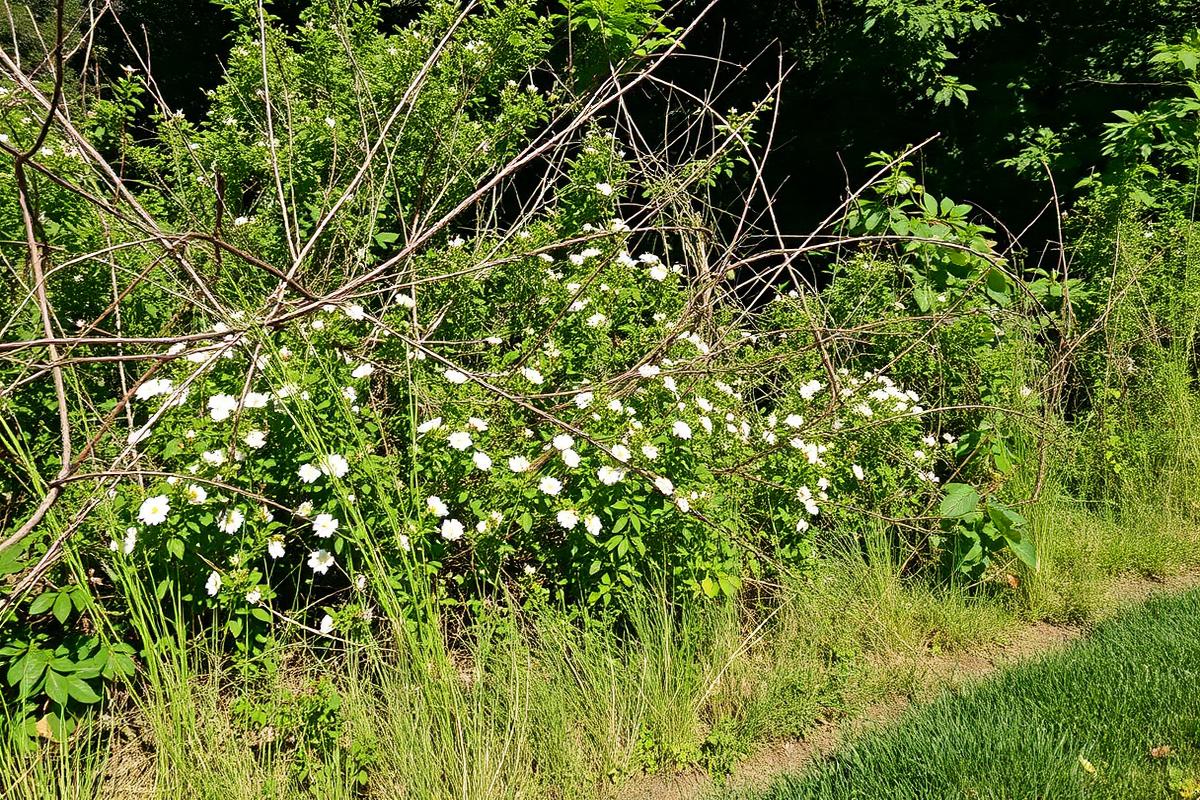
- Growth habit: Large arching shrub, 6 to 15 feet tall and equally wide. Canes arch over and root at the tips where they touch the ground, creating new plants.
- Thorns: Curved, recurved thorns along all stems. More aggressive than barberry thorns. Will tear clothing and skin.
- Leaves: Compound leaves with 5 to 11 leaflets. Fringed stipules (feathery structures) at the base of each leaf stalk are the key identifier.
- Flowers: Clusters of small white (sometimes pink) roses in June. Fragrant. Each plant produces thousands of flowers.
- Fruit: Small red rose hips that persist through winter. Birds eat them and spread seeds to new locations.
Why Multiflora Rose Is a Problem
A single multiflora rose plant can produce up to 500,000 seeds per year. Birds spread these seeds across your property and to neighboring properties. The plant also spreads vegetatively when arching canes touch the ground and root at the tips. A single plant can colonize an area 15 feet in diameter within a few years, and an untreated infestation can consume an entire field or woodland edge within a decade.
The thorny thickets are completely impenetrable to humans, dogs, and most wildlife. They block access to property boundaries, make fence maintenance impossible, and create fire hazards when dead canes accumulate. For property owners in Gorham, Buxton, Standish, Windham, and other rural towns in Southern Maine, multiflora rose is one of the most common reasons land becomes unusable.
Why Hand Removal Is Impractical
Attempting to remove multiflora rose by hand is an exercise in pain and futility. The curved thorns grab clothing and skin from every direction. Protective gear helps but does not eliminate the risk of deep scratches and torn clothing. The root systems are woody and extensive, requiring significant digging to fully extract. And any root fragments left behind will resprout.
For a thicket covering even a quarter acre, hand removal would take a crew days of miserable, bloody work. The plants fight back at every step.
How Forestry Mulching Clears Multiflora Rose
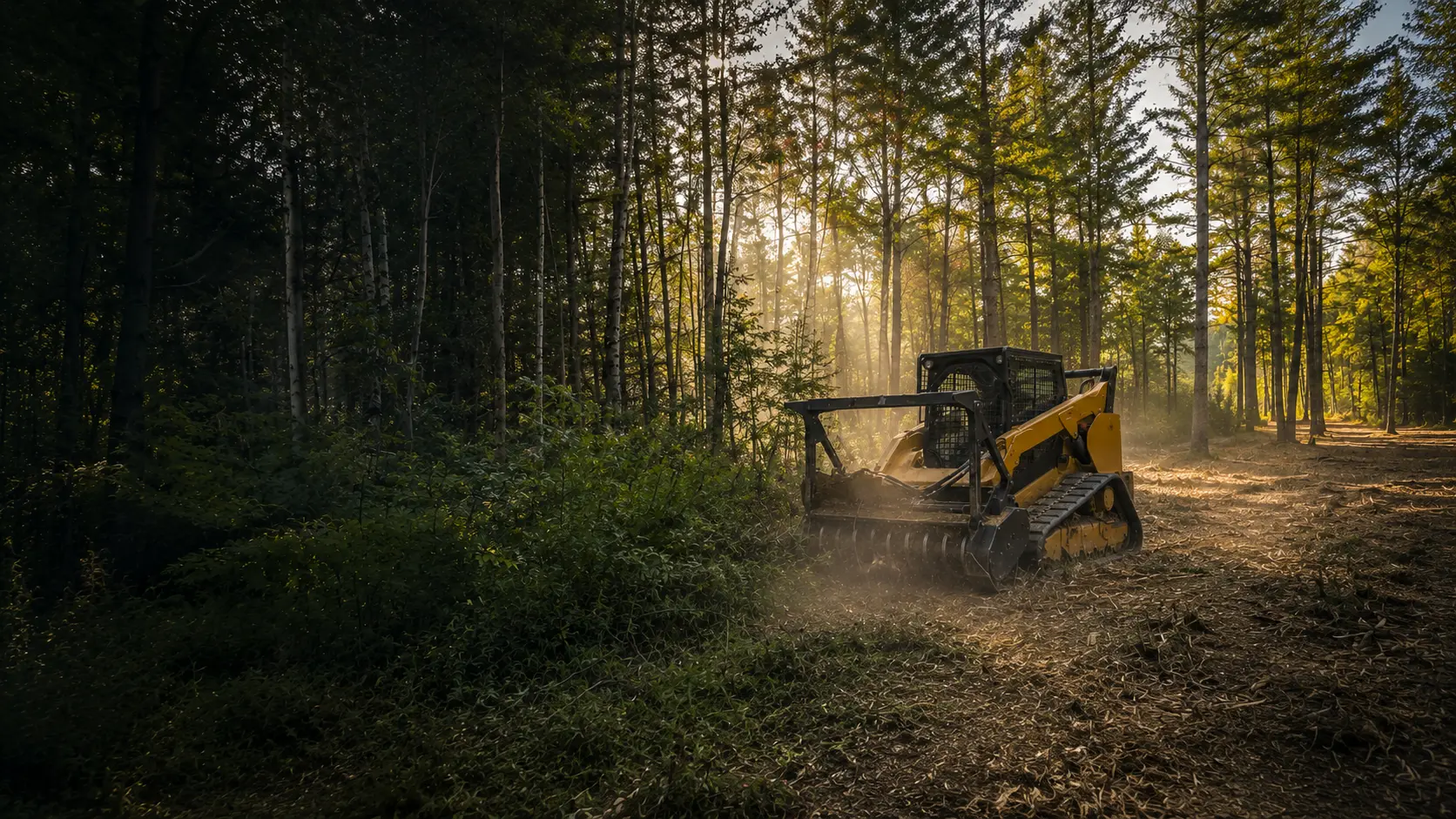
Our mulching equipment does not care about thorns. The rotating drum with carbide teeth processes multiflora rose canes, thorns, roots, and all, into fine mulch in seconds. What would take a crew days of painful hand work, our machine completes in hours. No one gets scratched. No one gets stuck. The thicket simply ceases to exist.
The mulcher grinds the root crowns below the soil surface, which is critical for preventing regrowth. The layer of mulch left behind suppresses any seeds in the soil from germinating. One or two follow-up passes during the growing season catches any resprouts before they can re-establish.
Property owners in Gorham, Buxton, Standish, Windham, and throughout Southern Maine regularly call us to reclaim fields, property boundaries, and woodland edges from multiflora rose. The transformation is dramatic: from impenetrable thorny wall to clean, usable land in a single day.
Thorny Thickets Taking Over Your Property?
Call (207) 819-8660 for a free assessment. We will clear multiflora rose from your property without anyone touching the thorns. Serving all of Southern Maine.